Extracting Value with Algorithmic Trading Strategies
In the dynamic realm of financial markets, algorithmic trading strategies have emerged as a potent tool for seasoned investors seeking to generate consistent returns. By leveraging complex algorithms and quantitative analysis, these strategies aim to identify patterns that may be complex to human observation. Algorithmic trading empowers traders with the ability to execute precisely timed orders, thereby reducing latency. This article delves into the intricacies of algorithmic trading strategies, exploring their potential benefits and providing insights into how they can be effectively deployed to surpass market benchmarks.
- Utilizing predictive algorithms
- Developing robust risk management systems
- Continuously refining and backtesting strategies
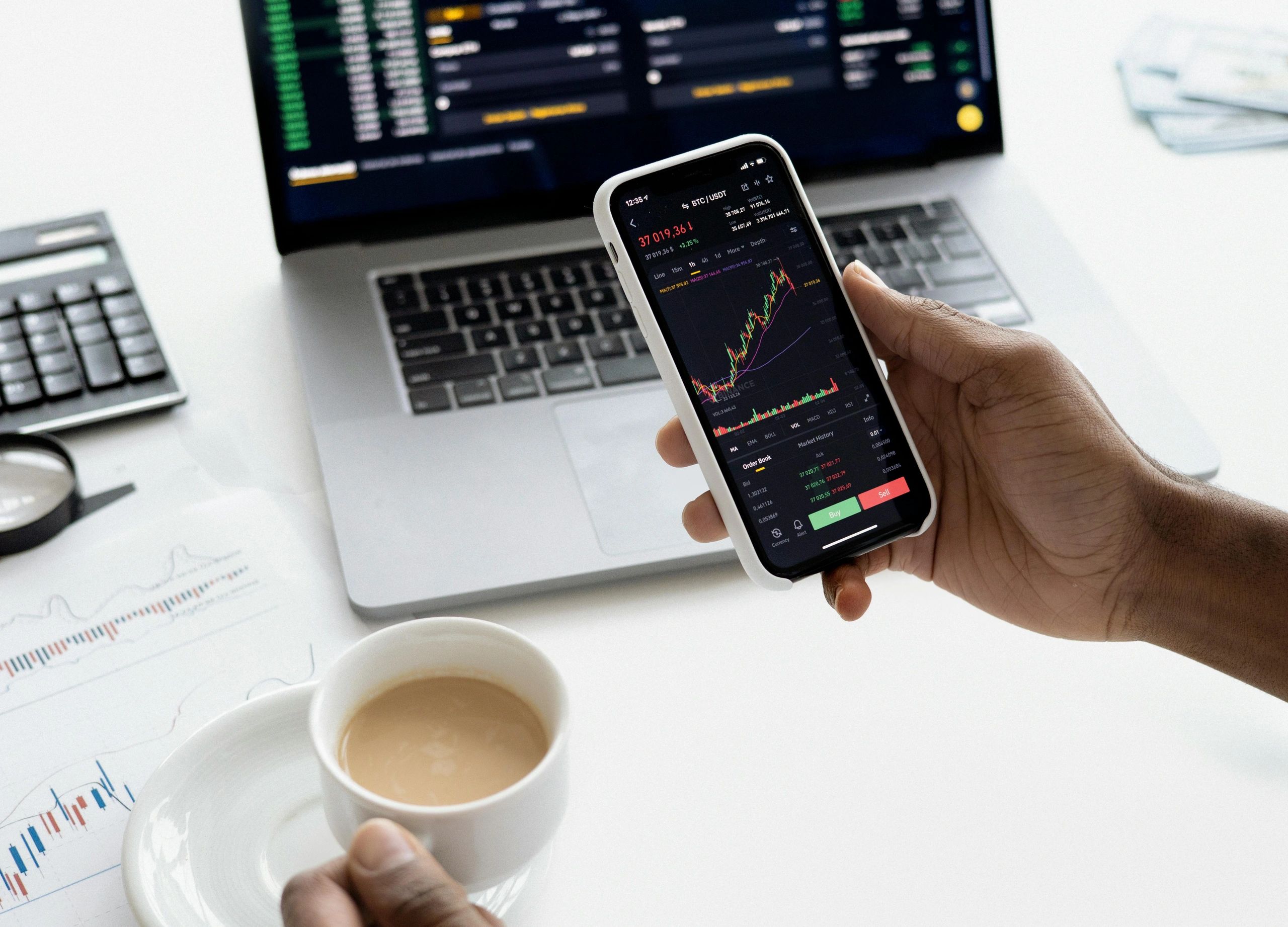
Automated Trading: The Future of Financial Markets?
The financial markets are rapidly evolving, driven by technological advancements and shifting investor behaviors. Automated trading, a system that leverages computer algorithms to execute trades autonomously, has emerged as a significant force in these markets. Proponents argue that automated trading offers several benefits, such as improved speed, efficiency, and precision. However, concerns also exist regarding its potential impact on market fluidity and the role of human traders.
- Moreover, the philosophical implications of automated trading demand careful consideration.
Consequently, the future of financial markets probably hinges on the ability to successfully integrate automated trading systems while mitigating potential risks and guaranteeing responsible market functions.
Options Trading Automation: A Comprehensive Guide
Diving into the dynamic world of options trading can be intriguing, but it also demands skill. To navigate this challenging landscape effectively, many traders are turning to sophisticated tools to streamline their strategies and maximize opportunities. Options trading automation empowers you to execute trades with speed, freeing up your time to focus on market trends. This comprehensive guide will delve into the fundamentals of options trading automation, equipping you with the knowledge to exploit its power.
- Discover the advantages of automating your options trading strategies.
- Grasp the multiple types of automation tools available in the market.
- Learn how to select the right automation platform for your individual needs and goals.
- Implement a robust automated trading system that aligns with your risk tolerance and financial objectives.
- Minimize risks associated with manual trading through algorithmic decision-making.
This guide will provide you with a clear understanding of how options trading automation can transform your trading experience, helping you achieve consistent performance.
Testing Automating Trading Strategies: Achieving Success Through Simulation
Backtesting automated trading systems is a crucial step in the journey to consistent profitability. It involves rigorously testing your algorithms against historical market data to evaluate their results. By simulating past market conditions, you can gauge how your system would have performed and identify potential issues before deploying it with real capital.
A robust backtesting process should encompass a wide range of market situations, including periods of volatility, trends, and sideways markets. Additionally, it's essential to use realistic entry rules and account for factors like transaction costs and slippage. Through meticulous backtesting, you can refine your trading system and increase the likelihood of success in live markets.
Remember, backtesting is not a guarantee of future profits, but it provides invaluable insights into the strengths and weaknesses of your tradingmethod. By embracing this systematic approach, you can make more data-driven decisions and pave the way for a successful automated trading journey.
Algorithmic Trading for Beginners: A Step-by-Step Approach
Diving into the world of algorithmic trading can seem daunting, however it doesn't have to be. With a structured approach and the right tools, you can successfully navigate this exciting field. This step-by-step guide will equip you with the fundamental understanding needed to get started with algorithmic trading. First, familiarize yourself with the core concepts of trading strategies, market analysis, and risk management. Then, delve into the realm of programming languages commonly used in algorithmic trading, such as Python or R.
- Build a simple trading strategy based on technical indicators or fundamental data.
- Evaluate your strategy using historical market data to assess its effectiveness.
- Adjust your algorithm based on the backtesting results to improve its accuracy.
- Implement your algorithm on a demo trading platform to gain practical hands-on knowledge.
Remember, algorithmic trading is an ongoing learning process. Stay updated with market trends, refine your strategies, and continuously monitor your performance. With patience, dedication, and a commitment to learning, you can successfully navigate the world of algorithmic trading.
High-Frequency Trading: The Speed and Complexity of Automating Finance
The financial landscape continues to evolve at a breakneck pace, fueled by technological advancements that have revolutionized the way markets operate. High-Frequency Trading (HFT), a burgeoning force in this dynamic ecosystem, leverages sophisticated algorithms to execute trades at speeds previously unimaginable. HFT firms utilize powerful computing infrastructure and intricate trading strategies to capitalize on fleeting price discrepancies, generating profits from minuscule market movements.
This high-speed, automated approach to finance presents both opportunities and challenges. While HFT can enhance market efficiency by providing liquidity and tightening bid-ask spreads, it also raises concerns about systemic risk and market manipulation. The complexity of HFT algorithms demands rigorous regulatory oversight to ensure fair market practices and protect investors from potential harm.
- Additionally, the ethical implications of HFT are actively debated within the financial community.
- Concerns surrounding algorithmic bias, market transparency, and the potential for unintended consequences merit ongoing evaluation.
As technology continues to evolve at an unprecedented rate, HFT is likely to remain a significant force in the financial markets. Managing the complexities and potential risks associated with this high-frequency trading paradigm will be crucial for ensuring the stability and integrity of global finance.
Unleash Your Options Trading with AI-Powered Algorithms
In the dynamic world of options trading, staying ahead in front of the curve is paramount. With AI-powered algorithms rapidly evolving, traders now here have access to sophisticated tools that can process vast amounts of data and identify profitable opportunities with unprecedented accuracy. These algorithms leverage machine learning strategies to predict market movements, assess risk, and generate optimal trading strategies tailored to individual profiles. By incorporating AI into their trading arsenal, options traders can boost their decision-making process, limit potential losses, and ultimately achieve superior results.
- Moreover, AI algorithms can proactively learn and adjust to changing market conditions, ensuring that trading strategies remain viable over time.
- This empowers traders to navigate the complexities of options markets with greater confidence and potentially unlock new levels of profitability.
Quantitative Trading Strategies
Automated trading strategies leverage the power of algorithms and mathematical models to execute trades at velocity, often minimizing human involvement. These strategies are frequently based on technical signals or fundamental data, analyzing historical price movements and market trends to identify profitable trading scenarios. Sophisticated algorithms can simultaneously monitor multiple markets and execute trades in a fraction of a second, exploiting short-term price fluctuations.
The science behind automated trading relies on statistical modeling and machine learning, which enable these systems to learn from past market behavior and predict future price movements. Robust risk management techniques are also essential to mitigate potential downsides, ensuring that the approach operates within predefined parameters. Automated trading strategies have become increasingly popular in recent years, as they offer a opportunity for increased efficiency and profitability.
Demystifying Algorithmic Trading: A Practical Overview
Algorithmic trading continues to be an increasingly popular method for executing trades in financial markets. It involves using advanced computer programs, or algorithms, to make immediate trading decisions based on pre-defined rules and market data analysis. These algorithms vary in complexity from simple trend-following strategies to multivariate models incorporating factors like news sentiment, social media activity, and even weather patterns.
Despite the potential for high profits, algorithmic trading also involves inherent risks.
It's crucial to understand that these systems are not foolproof and can sometimes produce unexpected results, especially in volatile market conditions.
- Profitable algorithmic trading requires a deep understanding of financial markets, programming languages, and risk management principles.
- Additionally, traders need to continuously monitor and optimize their algorithms based on changing market dynamics.
Building Robust Automated Trading Systems: Best Practices and Pitfalls
Developing robust automated trading systems necessitates a methodical approach that encompasses various key best practices. , Initially, thorough backtesting is crucial to analyze the performance of your trading strategy across diverse market . scenarios. , Moreover, meticulous risk management strategies are critical to minimize potential . downsides.
It's imperative to deploy robust error handling and monitoring mechanisms for guarantee system dependability. , Continuously analyzing your trading system or making essential modifications is crucial to sustain its . competitiveness.
Conversely, pitfalls frequently arise if developers neglect key considerations. Overfitting can lead to a system that operates poorly in live market . environments.
Ignoring financial dynamics can result in unforeseen . downsides. Lack of diversification frequently expose your system to excessive . vulnerability.
The Power of Quantitative Analysis for Automated Trading Success
In the dynamic realm of automated trading, quantitative analysis stands as a cornerstone for achieving consistent profitability. By leveraging mathematical models and statistical algorithms, traders can identify profitable opportunities within financial markets with increased accuracy. These powerful analytical techniques enable the development of robust trading systems that execute trades automatically, minimizing emotional interference and maximizing returns.
Quantitative analysis encompasses a diverse spectrum of methods, including time series analysis, statistical arbitrage, and machine learning. By scrutinizing historical price data, market indicators, and other relevant variables, quantitative analysts can uncover hidden relationships and predict future market movements with a high degree of confidence.
- Furthermore, the implementation of mathematical models allows for simulation of trading strategies before deployment in live markets. This vital step helps traders to adjust their strategies based on historical performance and mitigate potential risks.
- Therefore, the integration of quantitative analysis into automated trading workflows empowers traders to make objective decisions, navigate market volatility with greater ease, and achieve long-term profitability.
Exploiting Big Data for Profitable Algorithmic Trading
In today's dynamic financial markets, algorithmic trading has emerged as a lucrative strategy. By harnessing the power of big data, traders can gain an advantage and enhance their yields. Big data provides a wealth of insights that can be analyzed by sophisticated algorithms to detect trends in market behavior. This facilitates traders to deploy trades with accuracy, reducing risk and boosting the probability of profitability.
- Sophisticated algorithms can analyze massive datasets in real-time, identifying subtle market indications that may be invisible by human traders.
- Quantitative models based on historical data can forecast future price movements with precision, directing trading decisions.
- Backtesting strategies allow traders to assess the efficacy of their algorithms in historical market conditions, minimizing potential losses in real-world trading.
Additionally, big data analytics can enhance other aspects of algorithmic trading, such as position sizing. By observing market fluctuations, traders can modify their algorithms to minimize potential losses and protect capital.
Automated Trading Platform Reviews: Finding the Right Fit for You
Navigating the dynamic world of automated trading platforms can be a tricky task. With numerous options available, finding the right fit for your individual needs is crucial. That's where comprehensive reviews come into play.
Thorough analyses provide valuable information about a platform's features, performance, trustworthiness, and user experience. They can help you identify which platform aligns with your trading goals and risk tolerance.
Before diving into any system, consider your requirements. What type of assets do you want to invest in? Do you prefer a platform with advanced features or a more simplistic approach?
A well-crafted review will examine these key aspects, providing a comprehensive understanding of the platform's advantages and weaknesses. By carefully considering multiple reviews, you can make an intelligent decision and choose a platform that empowers your financial journey.
Options Greeks in Algorithmic Trading: Understanding the Risks and Rewards
Options trading can be a lucrative endeavor for experienced algorithmic traders who accurately harness the power of Options Greeks. These mathematical derivatives represent the sensitivity of an option's price to different underlying factors, such as price fluctuations, volatility, and time decay. By a deep understanding of these metrics, algorithmic traders can reduce risk and boost potential returns. However, navigating the complex world of Options Greeks requires careful analysis and a robust trading strategy to thrive.
A key challenge for algorithmic traders is managing the inherent volatility associated with options. Sudden shifts in market conditions can drastically impact an option's price, potentially leading to considerable losses if not sufficiently hedged.
- Furthermore, understanding the interplay between different Greeks is vital for developing a successful trading strategy.
- For, while Delta measures an option's sensitivity to price changes, Theta represents its time decay. A trader must carefully evaluate both of these factors when establishing their trading positions.
In conclusion, algorithmic trading with Options Greeks offers a attractive opportunity for experienced traders to achieve substantial returns. However, it is essential to approach this market with care, conducting thorough research and risk management practices to confirm success.
Python for Automated Trading: A Powerful Tool for Market Makers
Python has emerged as a dominant language in the realm of automated trading. Its flexibility, coupled with a rich ecosystem of modules, makes it an ideal choice for market makers seeking to streamline their trading strategies. Python's concise syntax allows developers to build sophisticated algorithms with relative ease, enabling them to process trades at high speeds.
- Python frameworks such as QuantLib provide a solid foundation for developing and testing trading strategies.
- Market data connectivity is simplified through Python libraries like numpy, allowing traders to access real-time market information.
Furthermore, Python's extensive community support ensures that developers have access to a wealth of resources, tutorials, and forums, fostering collaboration and knowledge sharing within the trading community.
The Ethics of Algorithmic Trading: Navigating a Complex Landscape
Algorithmic trading presents both immense opportunities and considerable ethical challenges. While proponents emphasize its ability to enhance market efficiency and minimize transaction costs, critics articulate concerns about transparency. The agility of algorithmic execution can lead to unpredictable market movements, potentially widening existing inequalities.
Furthermore, the use of complex algorithms presents questions about fairness in decision-making. Developing clear ethical guidelines and regulatory frameworks is essential to ensure that algorithmic trading serves the broader public welfare.
A multi-faceted approach incorporating industry self-regulation, government oversight, and academic research is required to navigate this nuanced landscape.
Cutting-Edge Order Types for Automated Trading: Executing Trades with Precision
Automated trading leverages advanced order types to execute trades with remarkable precision. These orders go beyond simple market orders, allowing traders to define precise parameters for triggering trades. By harnessing this level of flexibility, automated trading systems can optimize returns and mitigate risk.
- Market-if-touched orders: These orders specify a maximum price at which a trade will be executed, ensuring that traders do not overpay on their desired price.
- Trailing stop orders: These orders are activated when the price of an asset falls below a predetermined threshold, instantly placing a market order to liquidate the position.
- Trailing stop orders: These orders adjust their trigger price based on the price movements of an asset, providing a dynamic hedge against potential losses.
Furthermore, automated trading platforms often offer a variety of sophisticated order types that can be customized to meet the specific needs of traders. These orders can integrate multiple conditions, allowing for precisely aligned trading strategies.
Threat Management Approaches for Automated Trading Platforms
Successful automated trading platforms require robust risk management strategies to mitigate potential losses. Implement comprehensive controls to monitor and manage market variations. Regularly assess your trading algorithms and settings to identify and address potential vulnerabilities. Employ limit orders to limit losses in negative market conditions. Diversify your portfolio across different asset classes and markets to reduce overall risk exposure. Continuously monitor market trends and developments that may affect your trading strategies. Educate yourself on best practices for automated trading risk management and stay informed about industry standards.
Mitigating Drawdown in Algorithmic Trading Systems
Minimizing loss is a paramount concern in the realm of algorithmic trading systems. A significant drawdown can hinder an otherwise profitable strategy, diminishing investor confidence and ultimately resulting to portfolio shrinkage. To effectively mitigate drawdown risks, traders must implement a multifaceted approach that encompasses rigorous portfolio construction techniques.
- Employing trailing stops can help minimize losses when trades move against the expected direction.
- Asset allocation across multiple asset classes can alleviate the impact of any single security's underperformance.
- Historical analysis is crucial for evaluating a strategy's performance during different market conditions, including periods of instability.
Additionally, it is essential to continuously monitor the performance of algorithmic trading systems and make adjustments as needed.
How Machine Learning Drives Automated Futures Trading
In the dynamic landscape of futures trading, where volatility and speed are paramount, machine learning techniques have emerged as a transformative force. These sophisticated systems leverage vast datasets and statistical analysis to identify patterns, predict market movements, and execute trades with remarkable precision. By automating trading strategies, machine learning empowers traders to optimize returns, mitigate risk, and gain a competitive edge in this rapidly evolving domain.
- Additionally, machine learning algorithms can continuously learn and adapt to changing market conditions, making them highly profitable in dynamic environments.
- As a result, the adoption of machine learning in automated futures trading is revolutionizing the industry, enabling traders to execute trades with greater speed, accuracy, and efficiency.
Despite these benefits, it's crucial for traders to approach machine learning with care and ensure that algorithms are rigorously tested and monitored. The inherent complexity of financial markets requires a comprehensive approach that combines human expertise with the power of machine learning.